


Tralleis Ancient City: History, Three Eyes and Culture Route in Aydin
General Information About Tralleis Ancient City
Tralleis Ancient City is an important archaeological site located on a plateau on the southern slope of the Kestane Mountains, north of Aydin city center. Since it is located about 1 kilometer from the city center, it is an easily accessible historical stop for visitors exploring the region.
Known as Tralleis or Trallais in ancient sources, the city was built on the fertile lands of the Meander basin. Its location made it an important center for trade routes, culture and regional development throughout history.
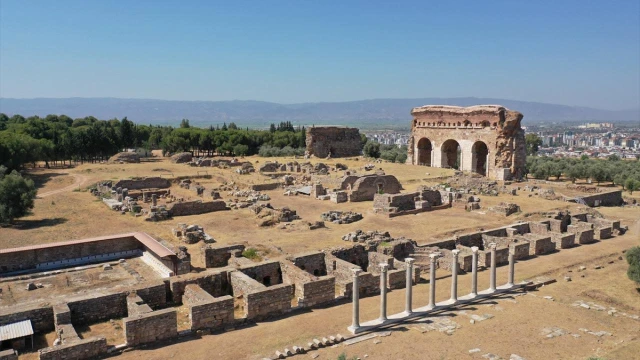
Today, Tralleis is best known for the gymnasium remains called “Three Eyes” by local people. In addition, remains of a bath, theatre, agora, stadium and structures from different periods show the size and historical importance of the ancient city.
History of Tralleis
The foundation of Tralleis is associated in ancient sources with the Argives and Tralleisians. It is also believed that the site may have been used by the Carians in earlier periods.
In 334 BC, during Alexander the Great’s campaign in Anatolia, Tralleis surrendered without resistance together with Magnesia and Nysa. After that, it changed hands among Hellenistic kingdoms.
The city developed during the Seleucid and Pergamon periods and maintained its importance under Roman rule. After being damaged by a major earthquake between 27 and 24 BC, it recovered with the support of Augustus and was known for a time as Caesarea.
During the Byzantine period, Tralleis became an important bishopric center. In the Seljuk and Ottoman periods, however, the city lost much of its ancient importance.
Structures to See in Tralleis Ancient City
The surviving remains of Tralleis show that the city was once an important center for education, sports, commerce, social life and religious activities.
Three Eyes and the Gymnasium Remains
The most famous remain of Tralleis is the vaulted section of the gymnasium known locally as “Three Eyes.” This structure reflects the gymnasium tradition, which was important for education, sports and cultural activities in antiquity.
Today, Three Eyes is the first structure associated with Tralleis and has become the symbol of the ancient city.
Roman Bath, Theatre, Agora and Stadium
Tralleis also includes remains of a Roman bath, theatre, agora and stadium. These structures are important for understanding the city’s social and cultural life.
The agora can be considered the center of commercial and public life, while the theatre and stadium were used for entertainment, competitions and public events.
Cult of Zeus Larasios
Ancient sources and archaeological finds point to the presence of the Zeus Larasios cult in Tralleis. Although the exact location of the Temple of Zeus Larasios is not yet known, this cult is considered an important part of the city’s religious life.
Cultural Importance of Tralleis
In antiquity, Tralleis was known for its leather production and red-colored pottery. These production activities strengthened the city’s commercial and economic importance.
The city also stood out in sculpture. Two important sculptors, Apollonios and Tauriskos, were from Tralleis. Through such artistic connections, the name of Tralleis has an important place in art history.
Anthemius of Tralles, one of the architects of Hagia Sophia, was also from this city. This strengthens Tralleis’ historical importance in science, architecture and art.
The Seikilos Epitaph and the Earliest Complete Song
One of the most remarkable finds associated with Tralleis is the Seikilos Epitaph. Discovered in 1883 during the construction of the Izmir-Aydin railway, this tombstone contains the words and musical notation of a Greek song.
The Seikilos inscription is considered one of the earliest complete examples of musical notation to survive to the present day. One of its most important features is that musical notes are placed above the syllables of the text.
For this reason, the Seikilos Epitaph is important not only for Tralleis but also for world music history.
How to Get to Tralleis Ancient City
Tralleis Ancient City is located about 1 kilometer from Aydin city center. Therefore, it can be reached by a short drive from central Aydin or by walking from suitable routes.
Visitors travelling from Kusadasi can reach Tralleis by following the route toward Soke or Aydin. Private car, transfer or car hire options may be more comfortable for a day trip.
Visiting Tralleis During Your Kusadasi Holiday
Tralleis Ancient City is a good option for visitors who want to add a different historical and cultural route to their Kusadasi holiday. It can be planned together with Ephesus, Magnesia, Priene, Miletus, Didyma and Aydin Museum.
Thanks to its location near Aydin city center, Tralleis can be visited without spending a full day, yet it offers a rich archaeological and historical experience. Visitors staying in Kusadasi can include it in a day trip focused on culture and history.
Frequently Asked Questions About Tralleis Ancient City
Tralleis Ancient City is an important archaeological site located on a plateau on the southern slope of the Kestane Mountains, north of Aydin city center. It is about 1 kilometer from the city center.
Tralleis was an important settlement during the Hellenistic, Roman and Byzantine periods. Its gymnasium remains known as Three Eyes, along with the bath, theatre, agora and stadium, reflect the history of the region.
Visitors can see the gymnasium remains known as Three Eyes, Roman bath remains, theatre, agora, stadium and archaeological remains from different periods.
Three Eyes is the best-known surviving remain of Tralleis. It is considered part of the ancient gymnasium and has become the symbol of the site.
Tralleis is very close to Aydin city center. It can be reached by a short drive from the city center or by walking from suitable routes. Visitors from Kusadasi can follow the route toward Soke or Aydin.
Yes, Tralleis Ancient City can be visited as a day trip from Kusadasi. Thanks to its location near Aydin city center, it can be combined with Ephesus, Magnesia, Priene or Aydin Museum.
A general visit to Tralleis Ancient City may take around 30 minutes to 1 hour. Visitors who want to take photos and examine the remains in more detail may spend longer.
The Seikilos Epitaph was found near Tralleis and includes both lyrics and musical notation. It is considered one of the earliest complete examples of music to survive to the present day.
Yes, Tralleis can be visited with children. However, since it is an open archaeological site, comfortable shoes, hats, water and sun protection are recommended.
A visit to Tralleis can be planned together with Aydin Museum, Magnesia Ancient City, Priene Ancient City, Miletus, Didyma, Ephesus and other historical routes around Kusadasi.